
A Frustrating Problem With a Logical Explanation
You press the button on your garage door remote, the door starts its descent, and then — just before it reaches the floor — it stops and reverses back up. You try again. Same thing. Maybe it works on the third attempt, maybe it doesn't. Either way, it's one of the most common and frustrating garage door issues homeowners in Pataskala deal with, especially as seasons change and temperatures swing.
The good news is that this problem almost always has a logical, fixable cause. The bad news is that ignoring it can lead to bigger issues down the road, including a door that stops working entirely or one that becomes a safety hazard for your family. Let's walk through the most common reasons your garage door reverses before closing and what you can do about each one.
The Safety Sensors Are Misaligned or Blocked
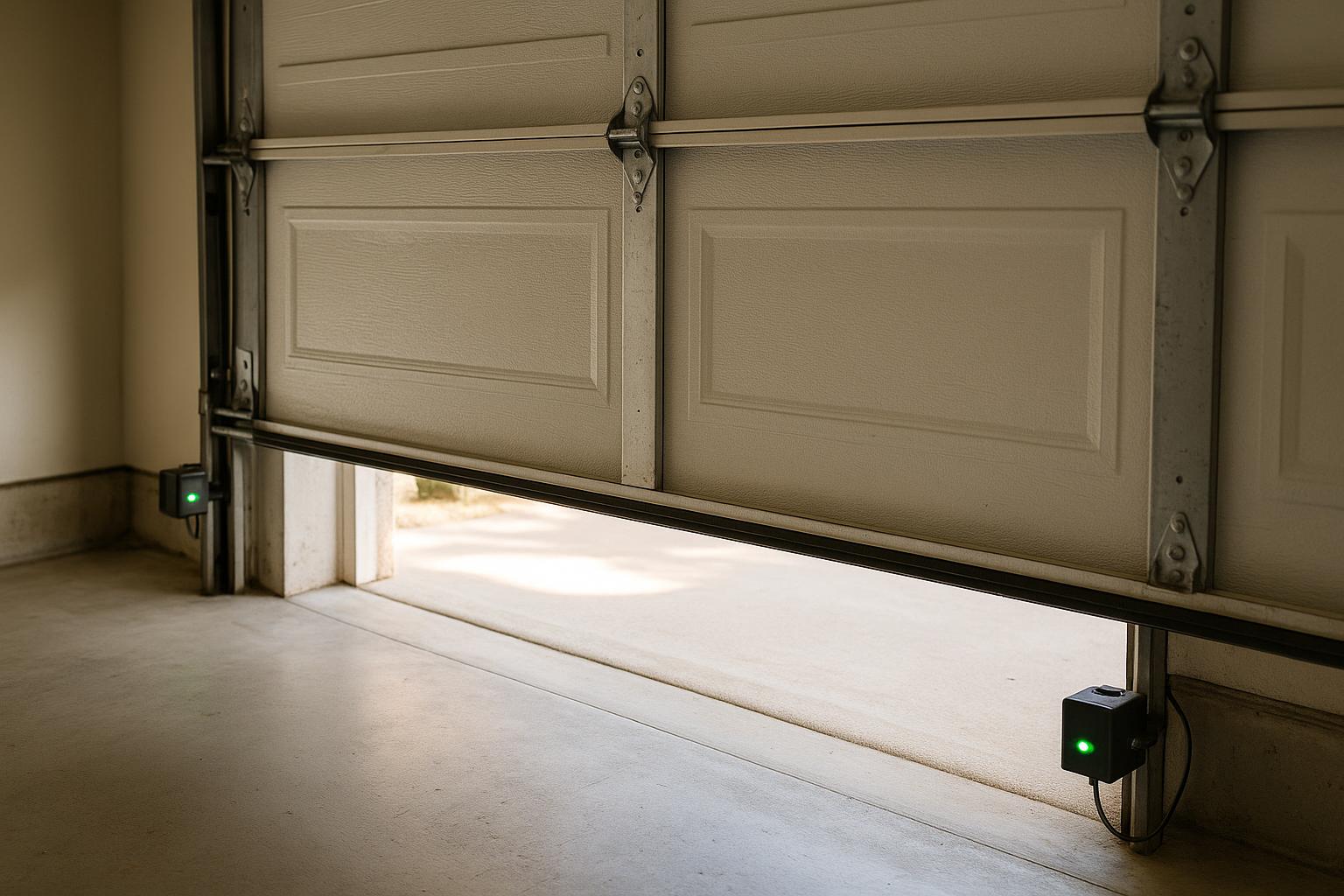
This is the number one cause of a garage door that reverses before reaching the ground. Every garage door opener manufactured after 1993 is required to have photo-eye safety sensors — two small devices mounted near the bottom of the door tracks on either side. These sensors send an invisible beam across the opening. If anything breaks that beam, the door automatically reverses to prevent crushing a person, pet, or object.
Here's what to check:
- Obstructions: Look for anything blocking the sensor path — a trash can, a garden tool, a cobweb, or even a buildup of dirt on the sensor lens itself.
- Alignment: Each sensor has a small LED light. If one is blinking instead of staying solid, the sensors are likely out of alignment. A gentle nudge can sometimes fix this, but be careful not to over-adjust.
- Wiring: Over time, sensor wires can become frayed or disconnected, especially if they run along the floor where they can be stepped on or run over.
Cleaning the sensor lenses with a soft cloth and making sure nothing is blocking the beam solves this problem for many homeowners. If the lights still blink after you've tried realigning them, there may be a wiring issue that needs professional attention.
The Close-Force Setting Needs Adjustment
Your garage door opener has a setting that controls how much force it uses to close the door. If this setting is too low, the opener interprets normal resistance — like the weight of the door itself or slight friction in the tracks — as an obstruction and reverses as a safety precaution.
Most openers have a small adjustment dial or screw labeled "close force" or "down force." Turning it slightly in the direction indicated by the manufacturer can give the opener enough power to complete the closing cycle. However, be cautious here. Setting the force too high can create a genuine safety hazard. If you're unsure, it's worth having a technician handle this adjustment properly.
The Travel Limit Is Set Incorrectly
The travel limit tells your opener how far the door should move before it considers itself fully open or fully closed. If the close limit is set too far, the opener essentially tries to push the door past the floor. When it can't go any further, the opener thinks something is blocking the door and reverses.
This is especially common after a new opener installation or after someone has made adjustments to the system. Like the force setting, the travel limit is adjusted with a small dial or screw on the opener unit. Small, incremental adjustments are key — a quarter turn at a time is usually the right approach.
Worn or Damaged Rollers and Tracks
If your garage door rollers are worn, cracked, or caked with grime, they can create enough friction to trigger the opener's safety reverse. The same goes for tracks that are bent, dented, or misaligned. As the door moves through a damaged section of track, the sudden increase in resistance tells the opener something is wrong.
Homeowners in Pataskala and surrounding areas like Reynoldsburg and Etna often see this issue worsen during winter months when metal contracts and lubrication dries out. A visual inspection of your rollers and tracks can reveal obvious damage. Look for rollers that wobble, don't spin freely, or have visible cracks. Check your tracks for dents or gaps where the track sections meet.
Replacing worn rollers and realigning tracks is a relatively straightforward repair that can make a dramatic difference in how smoothly and reliably your door operates.
Broken or Worn Cables and Springs
Your garage door springs and cables do the heavy lifting — literally. They counterbalance the weight of the door so the opener doesn't have to work as hard. When a spring loses tension or a cable begins to fray, the door becomes heavier for the opener to manage. This extra load can cause the opener to reverse during closing because it detects more resistance than expected.
Important safety note: Garage door springs are under extreme tension and can cause serious injury if handled improperly. If you suspect a spring or cable issue, this is not a DIY repair. Call a professional who has the tools and training to handle it safely.
Weather and Temperature Changes
Central Ohio weather can be hard on garage doors. Temperature fluctuations cause metal components to expand and contract, which can throw off sensor alignment, change the friction in your tracks, and affect the lubrication on moving parts. After a cold snap or a stretch of hot, humid weather, it's not uncommon for a door that worked perfectly yesterday to start reversing today.
Regular seasonal maintenance — including lubricating moving parts, checking sensor alignment, and inspecting hardware — goes a long way toward preventing weather-related issues. Many homeowners in Pataskala find that scheduling a maintenance visit in the spring and fall keeps their doors running smoothly year-round.
When to Call a Professional
Some of these fixes are simple enough for a handy homeowner to tackle. Cleaning sensors, removing obstructions, and applying lubricant are all reasonable DIY tasks. But if you've worked through the basics and your door is still reversing, or if the problem involves springs, cables, or electrical components, it's time to call in someone with experience.
At Pataskala Door & Opener, we diagnose and fix reversing door issues regularly for homeowners across Pataskala, Granville, Newark, and Kirkersville. We'll identify the root cause, explain your options in plain language, and get your door working reliably again — usually in a single visit.
Don't Ignore a Reversing Garage Door
It might seem like a minor annoyance, but a garage door that won't close properly is a security risk, an energy efficiency problem, and potentially a safety concern. Every time the door fails to close, your home is left exposed to weather, pests, and intruders. And the underlying cause — whether it's a worn spring, a misaligned track, or a failing opener — will only get worse with time.
If your garage door has started reversing before it reaches the floor, take a few minutes to check the sensors and look for obvious obstructions. If that doesn't solve it, give us a call. We're here to help with honest, straightforward service — no pressure, no upselling, just a door that works the way it should.