
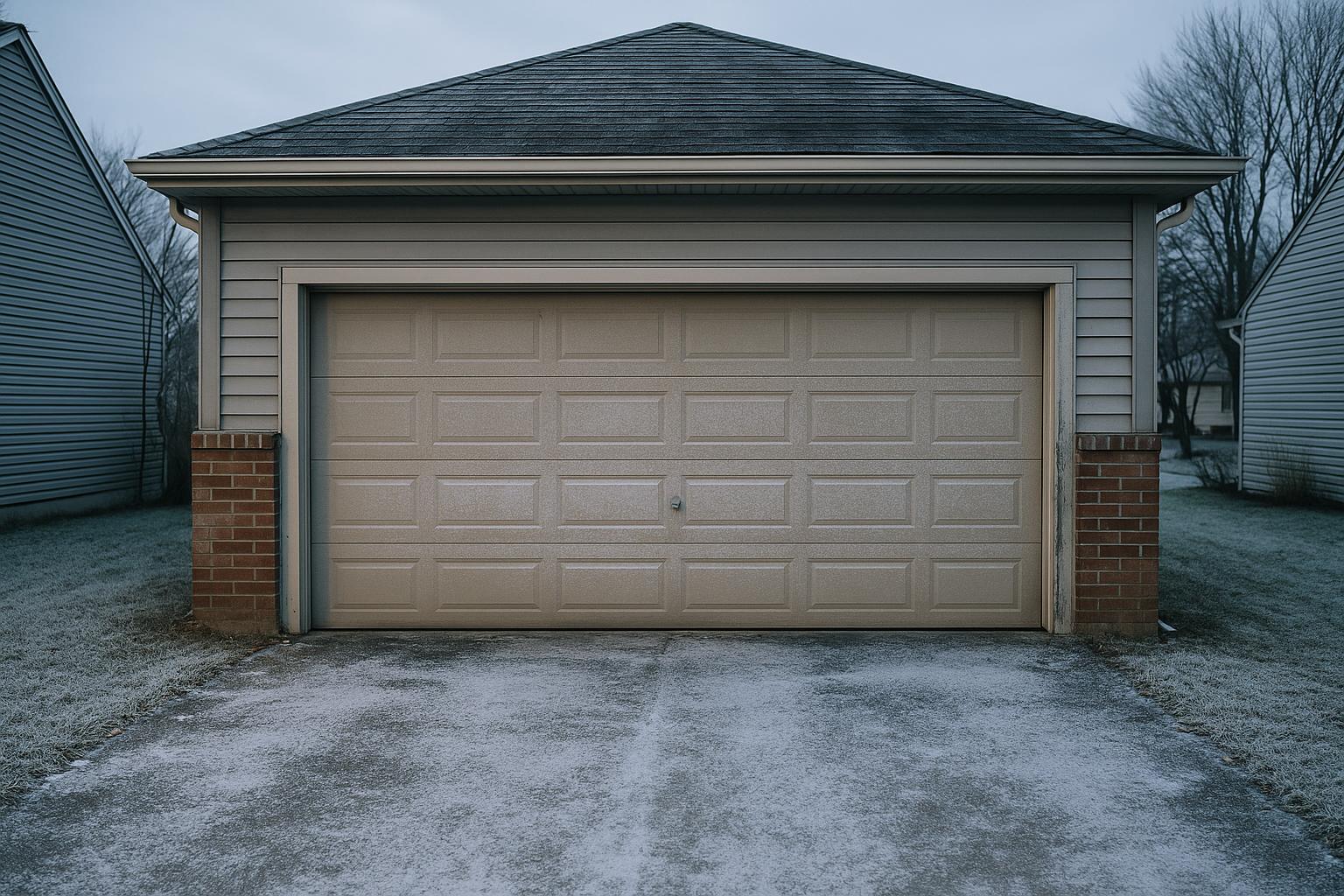
Why Cold Weather and Garage Doors Don't Always Get Along
If you've ever walked out on a freezing Pataskala morning, pressed your garage door opener, and heard nothing but a strained motor or a loud pop, you're not alone. Cold weather is one of the most common causes of garage door problems, and living in central Ohio means dealing with temperatures that can swing dramatically from one week to the next.
Understanding why your garage door struggles in the cold — and knowing what steps to take — can save you from being stuck in your driveway on the worst possible morning. Let's walk through the most common cold-weather garage door issues and how to handle each one.
The Door Is Frozen to the Ground
This is probably the most common winter garage door problem. When moisture collects along the bottom seal of your garage door and temperatures drop below freezing overnight, the rubber seal can literally freeze to the concrete floor or driveway surface.
If this happens, do not keep hitting the opener button. Forcing the door open with the motor can strip the gears in your opener, snap a cable, or tear the bottom seal right off the door.
What to Do Instead
- Try gently tapping along the bottom of the door with a rubber mallet or the heel of your boot to break the ice seal.
- Pour warm (not boiling) water along the base of the door where it meets the ground.
- Use a heat gun or hair dryer to carefully melt the ice along the seal.
- Once the door is free, dry the bottom seal and the ground beneath it to prevent refreezing.
To prevent this from happening again, apply a silicone-based lubricant or a thin layer of cooking oil along the bottom seal before the next freeze. This creates a barrier that makes it much harder for ice to bond the seal to the ground.
Metal Parts Contract in the Cold
Your garage door system is full of metal components — tracks, springs, hinges, rollers, and hardware. When temperatures plummet, metal contracts. This contraction can cause several problems:
- Tighter track tolerances: Rollers may bind or stick in the tracks as the metal shrinks slightly.
- Stiffer springs: Torsion and extension springs lose some of their flexibility in extreme cold, making them work harder to lift the door.
- Brittle hardware: Older or worn metal parts are more prone to cracking or snapping when they're cold and under tension.
Regular lubrication is the best defense here. A white lithium grease or silicone-based garage door lubricant applied to the springs, hinges, rollers, and tracks can keep everything moving smoothly even when temperatures drop into the teens or single digits.
Your Opener's Motor Struggles in Extreme Cold
Most garage door openers are designed to operate in a range of temperatures, but unheated garages in Pataskala can get bitterly cold during January and February. When the motor is cold, it may run sluggishly or fail to generate enough torque to lift the door — especially if the springs are also stiff from the cold.
Signs Your Opener Is Struggling
- The motor hums but the door barely moves or doesn't move at all.
- The door opens partway and then stops.
- The opener's light blinks, indicating a fault or overload.
If your opener is straining, give it a break between attempts. Running the motor repeatedly when it can't move the door can burn it out. If the problem persists after the garage warms up slightly, there may be a deeper mechanical issue that needs professional attention.
Thickened Lubricant Can Slow Everything Down
If you lubricated your garage door system with a general-purpose grease or WD-40 earlier in the year, cold weather can cause that lubricant to thicken into a gummy paste. Instead of helping parts move freely, it actually creates resistance.
The fix is to clean off old lubricant and replace it with a product designed for cold temperatures. Silicone-based sprays and garage door-specific lubricants maintain their consistency in freezing weather and won't gum up your tracks or rollers.
Weather Stripping and Seals Harden and Crack
The rubber weather stripping around your garage door — along the bottom, sides, and top — keeps cold air, moisture, and pests out of your garage. Over time, and especially in repeated freeze-thaw cycles, this rubber hardens, cracks, and loses its ability to seal properly.
Damaged weather stripping doesn't just let cold air in. It also allows moisture to enter, which contributes to the freezing problems we already discussed. Replacing worn weather stripping is an affordable maintenance task that makes a noticeable difference in your garage's temperature and your door's performance.
Misaligned Safety Sensors
The photo-eye sensors near the base of your garage door tracks can be affected by cold weather too. Temperature changes can cause the brackets holding the sensors to shift slightly, throwing off their alignment. When the sensors can't see each other properly, your door may refuse to close or reverse immediately after you try to close it.
Check that both sensor lights are solid — typically one green and one amber. If one is blinking, gently adjust the sensor until the light holds steady. Also make sure there's no frost, condensation, or ice buildup on the sensor lenses, as even a thin layer of moisture can block the beam.
A Simple Winter Maintenance Checklist
Taking a few minutes before winter sets in can prevent most cold-weather garage door headaches. Here's a quick checklist for homeowners in Pataskala and the surrounding areas:
- Lubricate all moving parts with a cold-weather-rated silicone or lithium grease.
- Inspect the bottom seal and weather stripping for cracks or gaps.
- Clean the photo-eye sensors and check their alignment.
- Test the door's balance by disconnecting the opener and lifting the door manually — it should stay in place when opened halfway.
- Listen for unusual sounds like grinding, popping, or scraping when the door operates.
- Clear debris and moisture from the tracks.
If anything feels off during this inspection — the door is heavy, the springs sound strained, or the opener is working harder than usual — it's better to call a professional before something breaks on the coldest day of the year.
When to Call a Professional
Some cold-weather garage door problems are easy DIY fixes. Melting ice from a frozen seal or wiping down a sensor lens takes just a few minutes. But if your door still won't open after troubleshooting, or if you suspect a spring, cable, or opener motor issue, it's time to bring in help.
At Pataskala Door & Opener, we've seen every winter garage door problem you can imagine. Whether you're in Pataskala, Reynoldsburg, Etna, or anywhere nearby, we can diagnose the issue quickly and get your door back in working order — even in the middle of a cold snap. Don't wait until a minor issue turns into an emergency. Give us a call and let's make sure your garage door is ready for whatever this Ohio winter throws at it.