
That Grinding Sound Isn't Normal
You press the button on your garage door opener, and instead of the smooth, quiet operation you're used to, you hear it — a loud grinding, scraping, or squealing noise that makes you wince every time the door moves. If this sounds familiar, you're not alone. Noisy garage doors are one of the most common complaints we hear from homeowners in Pataskala and the surrounding areas.
While it might be tempting to ignore the noise and hope it goes away on its own, a grinding garage door is almost always trying to tell you something. The good news is that most causes are fixable, and catching the problem early can save you from a much more expensive repair down the road.
Common Causes of a Grinding Garage Door
There are several reasons your garage door might be making unpleasant sounds. Let's walk through the most common culprits so you can get a better idea of what you might be dealing with.
1. Worn or Damaged Rollers
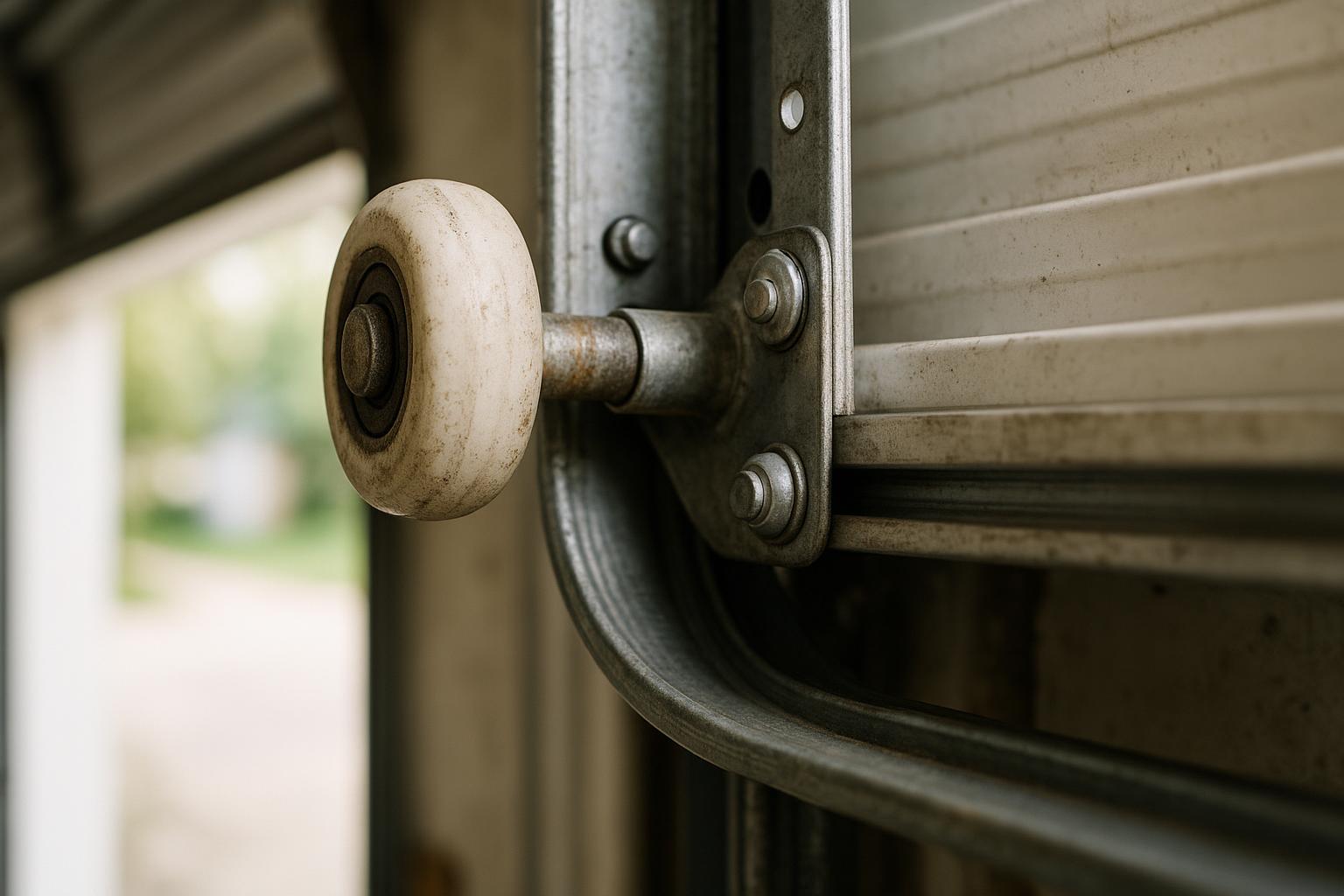
Garage door rollers are the small wheels that guide your door along the metal tracks on either side. Over time, these rollers wear down, crack, or lose their bearings entirely. When that happens, instead of rolling smoothly, they grind and scrape against the track.
Metal rollers are especially prone to this problem. Nylon rollers tend to be quieter and last longer, but even they wear out eventually. If you look at your rollers and notice flat spots, cracks, or visible wobbling, it's time to have them replaced.
2. Lack of Lubrication
This is probably the most common — and most easily fixed — cause of a noisy garage door. Your garage door has a lot of moving metal parts: hinges, rollers, springs, and the opener chain or screw drive. When these parts aren't properly lubricated, they create friction, which produces that grinding or squealing sound.
A quick application of a garage door-specific lubricant (not WD-40, which is a solvent and not a long-term lubricant) to the rollers, hinges, springs, and tracks can make a dramatic difference. We recommend lubricating these components at least twice a year — more often if you use your garage door frequently.
3. Misaligned Tracks
The metal tracks that your garage door rides along need to be perfectly aligned for the door to operate smoothly. If a track gets bumped, bent, or shifts out of position, the door will grind and scrape as it tries to move through the misalignment.
You can visually inspect your tracks by looking for gaps between the rollers and the track, or sections where the track appears bent or out of line. Do not try to adjust the tracks yourself — garage doors are extremely heavy and under significant tension. A misaligned track is a job for a professional.
4. Worn Opener Gear
If the grinding noise seems to be coming from the opener unit mounted on your ceiling rather than the door itself, the problem may be a stripped or worn gear inside the opener. Most chain-drive and screw-drive openers use a plastic or nylon main drive gear that wears down over time.
When this gear starts to fail, you'll hear a grinding sound when you activate the opener, and eventually the opener motor will run but the door won't move at all. Replacing the gear is a common repair that's much more affordable than replacing the entire opener unit.
5. Loose Hardware
Your garage door goes up and down hundreds or even thousands of times per year. All that vibration can gradually loosen the nuts, bolts, and brackets that hold everything together. Loose hardware rattles and creates grinding or clunking noises during operation.
Periodically checking and tightening the hardware on your garage door is a simple maintenance step that can eliminate a lot of unnecessary noise. Pay special attention to the hinges, roller brackets, and the bolts that secure the tracks to the wall and ceiling.
6. Worn or Damaged Bearings
The torsion spring system above your garage door uses a shaft with bearings at each end. If these bearings wear out, you'll hear a grinding or rumbling noise every time the door moves. Bearing replacement is a relatively straightforward repair for a trained technician, but it's not a DIY job because of the tension involved in the spring system.
When to Call a Professional
Some of these issues, like lubrication and tightening loose hardware, are things a handy homeowner can handle. But many garage door repairs involve components under extreme tension — particularly springs, cables, and tracks — that can cause serious injury if handled incorrectly.
Here are some signs that it's time to call a professional:
- The grinding noise is getting progressively louder or more frequent
- You notice the door moving unevenly or jerking as it opens and closes
- The door feels heavier than usual when you try to lift it manually
- You see visible damage to rollers, tracks, or springs
- The opener runs but the door doesn't move
- The door gets stuck partway open or closed
Ignoring these warning signs can lead to a complete door failure, which is not only inconvenient but can also be a safety hazard — especially if you have children or pets who use the garage.
Preventive Maintenance Goes a Long Way
The best way to avoid unexpected grinding noises and costly repairs is regular preventive maintenance. A professional maintenance visit typically includes lubricating all moving parts, inspecting and tightening hardware, checking track alignment, testing the balance of the door, and inspecting the springs and cables for signs of wear.
For homeowners in Pataskala and nearby communities like Reynoldsburg, Etna, and Kirkersville, we recommend scheduling a maintenance visit at least once a year. If your garage door sees heavy daily use — for example, if multiple family members come and go throughout the day — twice a year is even better.
Think of it like an oil change for your car. A small investment in regular maintenance can prevent major breakdowns and extend the life of your garage door system by years.
Don't Ignore What Your Garage Door Is Telling You
A grinding garage door is more than just a nuisance. It's a signal that something in the system needs attention. Whether it's a simple lubrication issue or a worn-out component that needs replacing, addressing the problem early is always easier and less expensive than waiting until something breaks completely.
If your garage door has been making noises that don't sound right, the team at Pataskala Door & Opener is here to help. We'll diagnose the issue, explain your options, and get your door running smoothly and quietly again. Give us a call or reach out online to schedule a service visit — we're happy to take a look and give you an honest assessment.