
Your Garage Door Springs Are Doing More Work Than You Think
Every time you open or close your garage door, the springs are doing the heavy lifting — literally. A standard two-car garage door can weigh between 150 and 250 pounds, and without properly functioning springs, your opener alone couldn't move it. Springs counterbalance that weight, making the door feel almost weightless as it travels up and down the tracks.
But like any mechanical component under constant stress, garage door springs wear out over time. For homeowners in Pataskala and the surrounding areas, understanding the lifespan of your springs — and recognizing the warning signs of failure — can save you from an unexpected breakdown, or worse, a safety hazard.
How Long Do Garage Door Springs Typically Last?
Most standard garage door springs are rated for approximately 10,000 cycles. One cycle equals one full open and one full close. If you use your garage door four times a day (two trips out, two trips back in), that adds up to roughly seven to nine years of use before the springs reach the end of their expected lifespan.
However, several factors can shorten or extend that timeline:
- Frequency of use: Families that use the garage as a primary entrance may cycle the door six to eight times daily, cutting the spring life significantly.
- Climate and temperature swings: Here in central Ohio, our winters bring freezing temperatures that cause metal to contract and become more brittle. The repeated expansion and contraction through seasonal changes adds stress to the springs over time.
- Maintenance habits: Springs that are lubricated regularly and part of a maintained system tend to last longer than those that are neglected.
- Spring quality: Not all springs are created equal. Higher-cycle springs (rated for 20,000 or even 30,000 cycles) are available and can double or triple the lifespan of standard springs.
Torsion Springs vs. Extension Springs
There are two main types of garage door springs, and knowing which type you have helps you understand what to watch for.
Torsion Springs
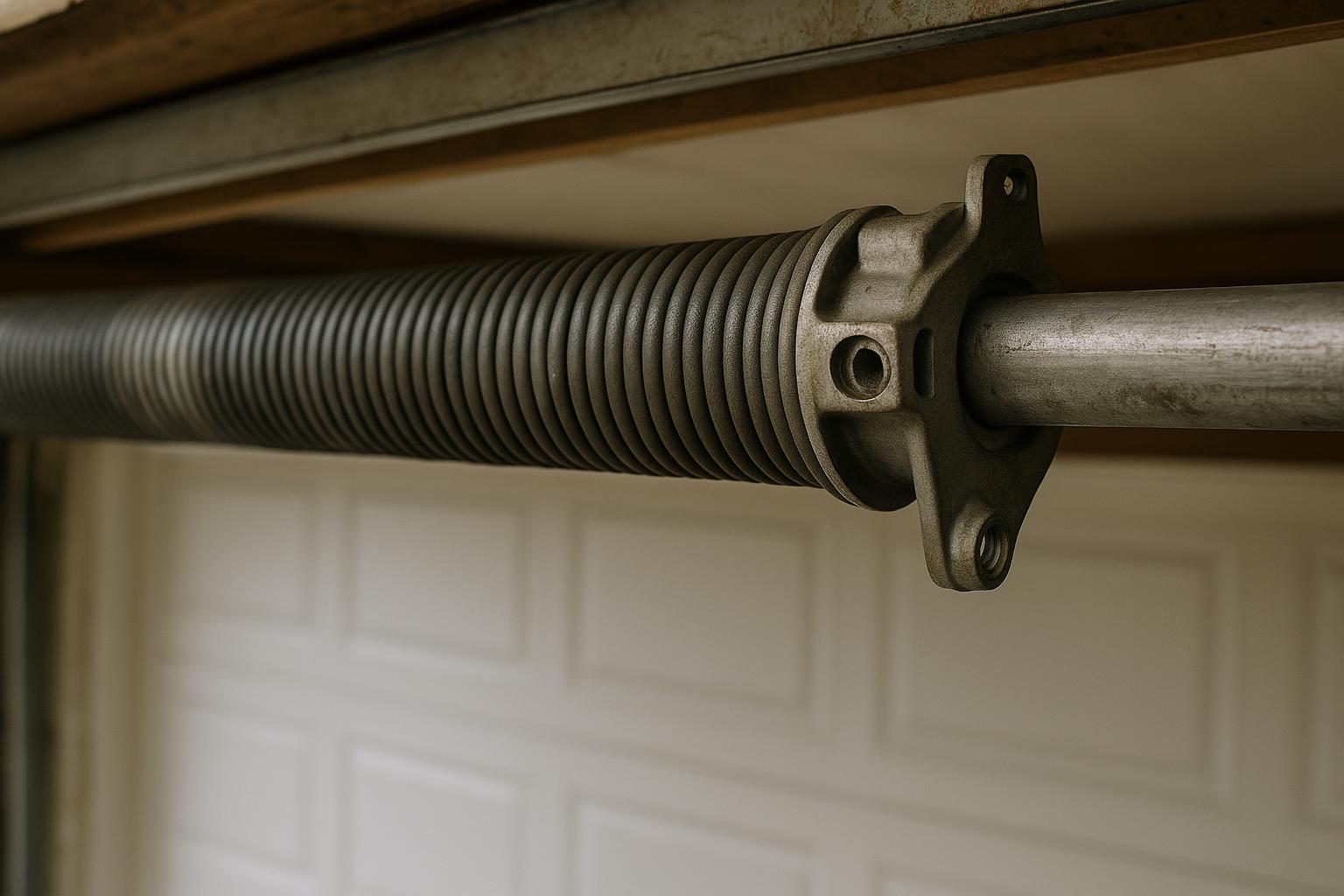
Torsion springs are mounted horizontally above the garage door opening. They use torque to lift the door and are the more common type found on modern residential garage doors. Torsion springs tend to last longer and provide smoother, more controlled movement. When they break, they typically stay on the shaft, which makes them somewhat safer than extension springs.
Extension Springs
Extension springs run along the horizontal tracks on both sides of the door. They stretch and contract to provide lifting force. These are more common on older doors and lighter single-car doors. Extension springs should always have safety cables running through them — if a spring breaks without a safety cable, it can become a dangerous projectile.
If you're unsure which type your garage door uses, a quick visual inspection will usually tell you. And if your home in Pataskala still has older extension springs without safety cables, that's something worth addressing sooner rather than later.
Warning Signs Your Springs Are Wearing Out
Springs rarely fail without giving some warning signs first. Here's what to watch for:
- The door feels heavier than usual: Try lifting the door manually by pulling the emergency release cord. If the door feels noticeably heavy or won't stay open on its own about three to four feet off the ground, your springs may be losing tension.
- The door opens unevenly: If one side of the door rises faster than the other, one spring may be weaker or close to breaking. This is especially common on two-spring systems.
- Visible gaps in the spring coils: A healthy torsion spring has tightly wound coils. If you notice a visible gap or separation in the coils, the spring has already broken.
- Loud bang from the garage: Many homeowners report hearing a loud sound — like a firecracker — coming from the garage. This is often the sound of a spring snapping. If this happens, do not attempt to operate the door.
- The opener struggles or stops working: When springs fail, the opener has to work much harder to lift the door. You may notice the motor straining, the door only opening partway, or the opener refusing to work altogether. This can burn out your opener motor if the problem isn't addressed.
- The door slams shut quickly: Without proper spring tension, the door can come crashing down instead of lowering in a controlled manner. This is a serious safety concern, especially in households with children or pets.
Can You Replace Garage Door Springs Yourself?
This is one of those jobs we strongly recommend leaving to a professional. Garage door springs are under an enormous amount of tension. A torsion spring on a standard two-car door can hold enough force to cause severe injury if it's released improperly. Every year, DIY spring replacements lead to emergency room visits across the country.
Professional technicians have the tools, training, and experience to replace springs safely and efficiently. The job typically takes under an hour, and a qualified technician will also inspect the rest of the system — cables, rollers, drums, and the opener — to make sure everything is working together properly.
Should You Replace One Spring or Both?
If your door uses two torsion springs and one breaks, we almost always recommend replacing both at the same time. Here's why: if one spring has reached the end of its lifespan, the other one is likely close behind. Replacing both ensures balanced performance and avoids a second service call just weeks or months later. It's also more cost-effective to handle both springs in a single visit.
Extending the Life of Your Springs
While springs will eventually wear out no matter what, regular maintenance can help you get the most out of them:
- Lubricate your springs twice a year using a silicone-based or white lithium garage door lubricant. This reduces friction and helps prevent rust.
- Schedule annual maintenance inspections. A technician can check spring tension, balance the door, and catch small issues before they become big problems.
- Consider upgrading to high-cycle springs when it's time for replacement. The upfront cost is slightly higher, but the extended lifespan makes it a smart long-term investment.
- Keep the tracks and hardware clean. Debris and buildup on the tracks force the springs to work harder than necessary.
When It's Time, We're Here to Help
If your garage door springs are showing signs of wear — or if they've already broken — don't wait to address the problem. A garage door with failed springs is both inconvenient and unsafe. At Pataskala Door & Opener, we provide fast, honest spring replacement service for homeowners throughout Pataskala, Reynoldsburg, Etna, Kirkersville, Granville, and Newark. We'll get your door back in working order quickly and make sure the job is done right.
Have questions about your garage door springs or want to schedule an inspection? Give us a call. We're always happy to help our neighbors keep their garage doors running safely and smoothly.